
6 Rib vs 8 Rib Serpentine Belt: What's the Difference?
Serpentine Systems
Why CVF standardized on 8-rib, when 10-rib becomes necessary, and what happens when a belt slips.
What is the benefit of an 8-rib over a 6-rib?
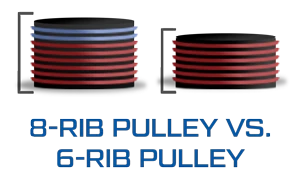
8 rib belts provide 33% more surface area which results in more grip when your system is running at full strength. 6 Rib systems are a significant upgrade to a standard V-Belt System, but can still slip with high horsepower applications.
Why not use a 10 or 12-rib then?
We have found 8 rib to be the "sweet spot" when it comes to reducing belt slippage without going overboard. 99% of applications will be able to fit the additional 2 grooves of our 8 rib serpentine system in their engine bay.
When is a 10-rib necessary?
A 10 rib belt isn't required until you start talking about supercharged applications that increase your base HP and Torque by 35-40%. CVF's Supercharged Wraptor uses a 10 rib and 8 rib belt combo to get the most out of your supercharger.
Are 8-rib belts readily available?
Absolutely. CVF stocks all sizes of Gates Belts required to get your kit ready to run.
Your local auto parts store will stock a large variety of 8 rib belts from various manufacturers. If they do not have a belt in stock, they can typically order it for you and have it to you within 24 hours.
Why do other companies make 6-rib systems?
6 rib serpentine systems are cheaper to make as less aluminum is needed. 20 years ago all you were able to find was 6 rib belts when it came to serpentine, but as time goes on, so does the demand for increased horsepower.
Watch it on video
The short version, side by side.
The Truth About 6-Rib vs 8-Rib Serpentine Systems — CVF Racing on YouTube
What are the consequences of a belt slipping?
If you have a belt that is slipping, you are bound to notice a few things when it comes to your vehicle's operation. Some of the more common problems:
- Dead battery
- Tough or no power steering
- Weak or no cooling from your AC compressor
- Engine overheating
Still need help? Our tech support team can get you pointed in the right direction.
Contact Support